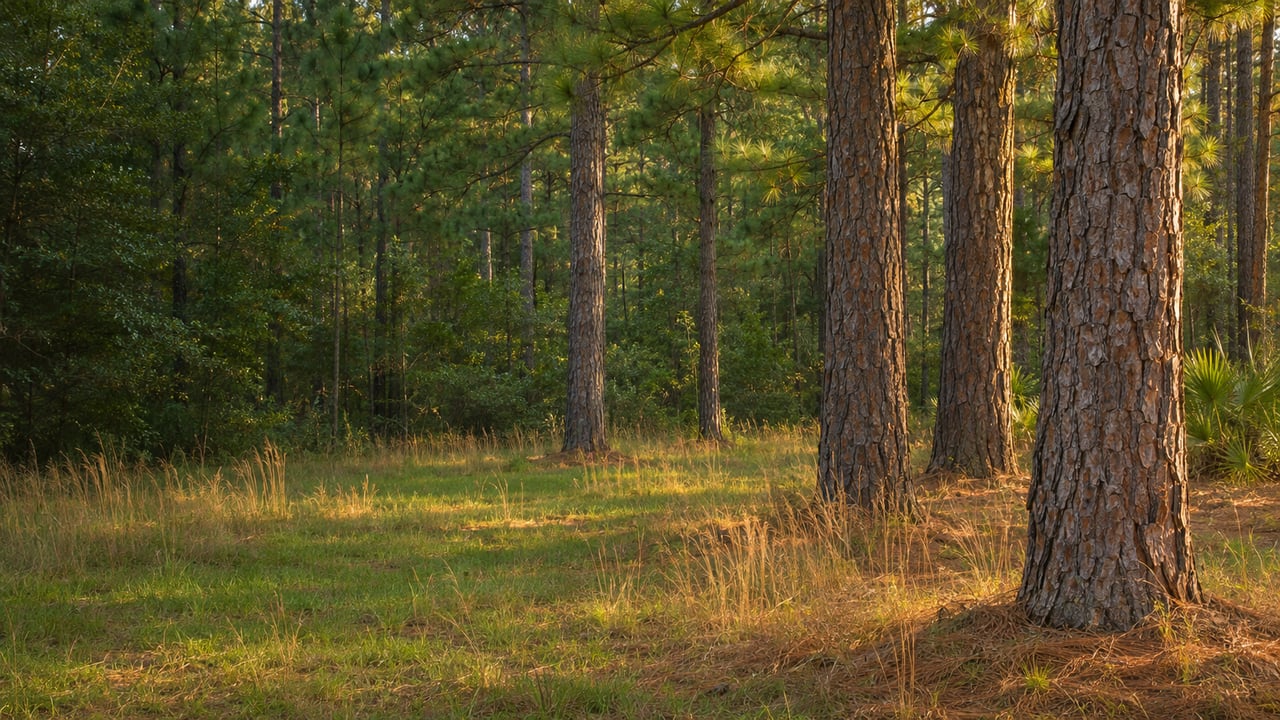
In the timber woods around Vidalia, the price of the smallest pines dropped by about two-thirds in a few months. Shane Harrelson, who owns and manages Ohoopee Land and Timber, told The Current GA in February 2026 that pulpwood, the smallest and cheapest grade of pine, fell from $15 to $16 a ton before International Paper's coastal Georgia closures to $5 to $6 a ton by January 2026. Pulpwood revenue on an average acre went from $1,125 to $375 over the same stretch. Getting that acre replanted costs about $350, so "to timber land owners, it doesn't seem to make sense anymore."
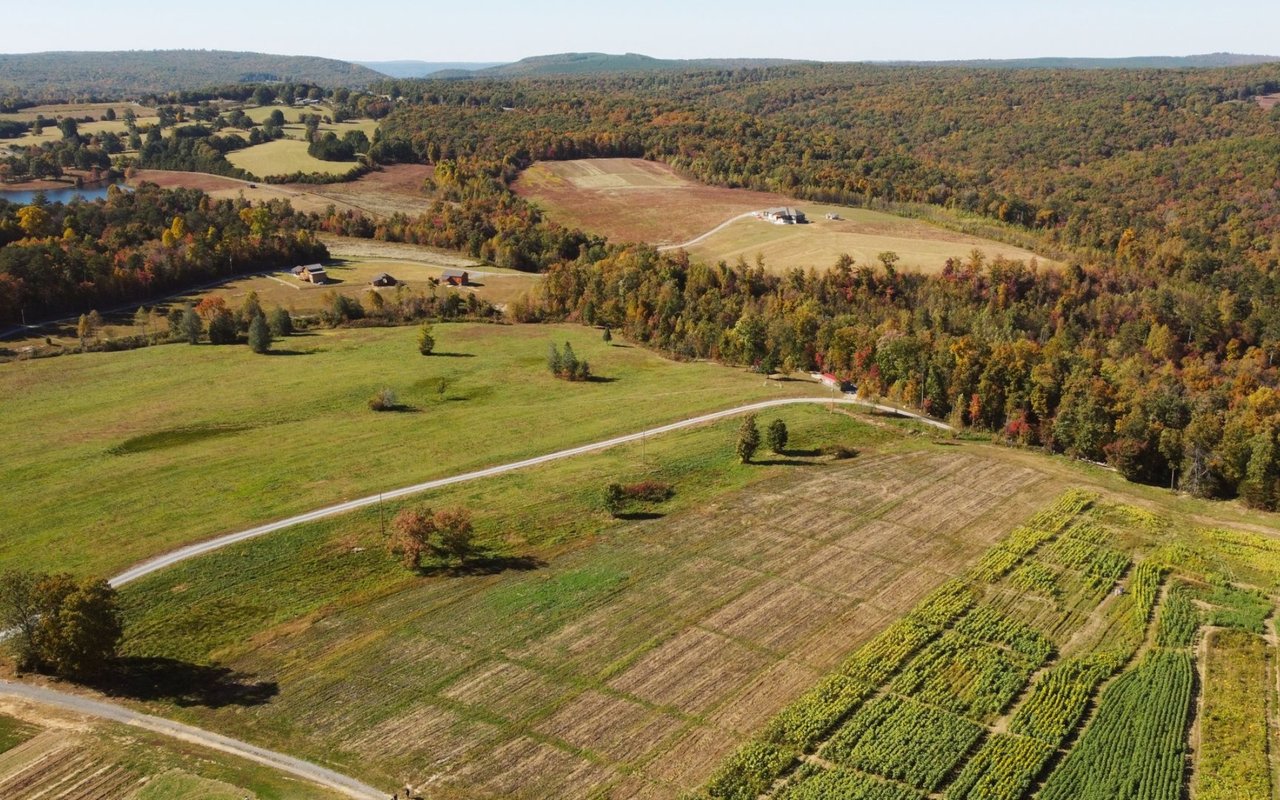
Plenty of buyers shopping South and coastal Georgia land have heard that the pines pay for the property. Since 2025, that depends on which pines. Whether a hunting or timber tract still carries its own weight now turns on how big its trees are, how far they are from a mill that still buys, and what the ground is worth to the person who walks it in November.
Where the Wood Used to Go
Three mill shutdowns in 2025 changed the math. Georgia-Pacific announced on May 14, 2025, that it would permanently close its Cedar Springs containerboard mill in Early County, affecting about 535 jobs. Georgia Farm Bureau reported that the mill had stopped running by the end of that August. On Aug. 21, 2025, International Paper announced it would close its Savannah containerboard mill and packaging plant, its Riceboro containerboard mill, and its Riceboro timber and lumber operation, with all of them phased out by the end of September 2025.
The state's Forestry Task Force report, published in January 2026, puts the cost at 1,655 jobs. It also counts 8.3 million tons of yearly timber demand lost when the four big mill operations closed, 4.5 million tons of it grown in Georgia. Georgia Forestry Association CEO Tim Lowrimore told the Savannah Morning News in September 2025 that the three facilities' shutdowns would displace about 6,000 truckloads of woodchips a week.
The demand isn't expected to come back on its own. In an October 2025 interview with GPB, Lowrimore pointed to more efficient cardboard production and more recycled fiber as reasons mills need less virgin wood. A Southern Ag Today market update from Oct. 26, 2026, counts more than 10 major pulp facilities across the South that closed between 2023 and 2025, taking out more than 25 million tons of annual fiber demand.
The Price Now Depends on Tree Size
A stand of pines contains trees of different sizes, and each size sells into a different market. Since the closures, the gap between those markets has widened.
TimberMart-South's third-quarter 2026 bulletin puts South-wide stumpage, the price paid for standing timber, at $23.88 a ton for pine sawtimber, $16.78 for chip-n-saw, $5.18 for pine pulpwood and $31.55 for hardwood sawtimber, all for that quarter. Southern Ag Today reports that South-wide pine pulpwood fell for the seventh quarter in a row in Q3 2026, to less than half its 2022 high.
Within Georgia, the two ends of the state moved apart. Southern Ag Today reports that in Q3 2026, pine pulpwood in southern Georgia was down 36% from the same quarter in 2025, among the sharpest drops in the South. Pine sawtimber in northern Georgia rose 13% over the same year.
So the sale price of a South Georgia tract can't lean on the total tons of wood standing on it. The question is how many of those tons are big enough to sell as something other than pulpwood. Steve Strickland, vice president of Beach Timber, which owns pole mills in Georgia, told The Current GA that in a stand of 1,000 trees, about 10% are straight enough to make poles. "The other 900 trees that aren't being harvested don't have a mill anymore, so nothing is being cut."
Two tracts with the same acreage and the same timber cruise total can now be very different properties. A stand of mature sawtimber still has a market. A young plantation that's years from sawtimber size is mostly a pulpwood stand for now, and its next harvest will sell at the $5-a-ton end of the price sheet unless the stand grows into a bigger product first.
Distance to a Mill Matters More
When nearby mills close, the wood has to travel farther, and longer hauls eat into what the landowner gets paid. After Cedar Springs closed, a LaGrange logger told the Albany Herald in July 2025 that the closure "killed his market." He said wood from farther south was pushing prices down and loggers were hauling longer distances.
Harrelson's experience shows the other side of that. The Current GA reported that his company brought its volume back to 60 to 65 loads a week by cutting mixed tracts, with pine and hardwood together, that sell into several product markets. Mixed tracts don't escape the downturn entirely. Southern Ag Today reports that hardwood pulpwood fell more than 24% in 2026, to slightly above $6 a ton in Q3. A tract with several kinds of timber still gives a logger more than one place to sell.
What the Price Rests On Now
When timber pays less, more of a tract's value has to come from somewhere else. In South Georgia, that has long been hunting. The biggest recent sporting-land sale in the region shows what a property's price rests on when hunting is the reason to own it. The Land Report reported that Southlands, a 5,746-acre sporting property near Bainbridge in Decatur County, listed for $42.5 million in 2024 and went under contract for $39 million in the spring of 2025. The outlet called it Georgia's most valuable sporting-property sale. A property like that is valued for its quail, its deer, its roads and its privacy. Its pulpwood barely enters the price.
Some new uses for low-value wood are in the works, and they're still at an early stage. CarbonCore's GeorgiaSAF program has picked Bainbridge for a proposed plant that would turn woody biomass into sustainable aviation fuel. Its Oct. 7, 2026, announcement sets a target of about 20,000 barrels a day at full planned capacity. Wood Bioenergy reported on Nov. 10, 2026, that site assembly, engineering, permitting and financing were still in progress, with the project in its development stage. In Jeff Davis County, Chestnut Carbon announced its first Georgia carbon project on Aug. 21, 2025, on nearly 1,500 acres. Most of that former row-crop ground will be replanted as native forest, and part of it will stay in recreational tracts. Think of these projects as possibilities a tract might someday tap. A buyer shouldn't count them as income.
Reading a Tract Before You Make an Offer
For a buyer comparing hunting or timber land in South or coastal Georgia this winter, the timber cruise matters more than ever, but the total volume of wood is the least useful line on it. Look at how the volume splits between pulpwood, chip-n-saw and sawtimber, and how many years the younger stands need to reach the bigger sizes. Southern Ag Today notes that owners in areas hit by mill closures may plant fewer trees per acre when they replant, or put off thinning. A seller who has postponed a thinning may be making a reasonable call for this market, and the stand you walk will reflect that decision.
Then ask the logistics questions a forester or a local logger can answer: which mills still buy each product from this county, and how far the trucks go. Last, put a value on the land itself, meaning its hardwood bottoms, food plots, roads, water and the quality of its hunting, separate from the trees. If you'd buy the tract at that number without counting the pines, the timber becomes a bonus.
Quick Answers
Did the mill closures affect North Georgia the same way? No. Southern Ag Today's Q3 2026 update shows northern Georgia pine sawtimber up 13% from a year earlier, while southern Georgia pine pulpwood was down 36%.
Do sawtimber prices look like they'll bounce back soon? The same update ties weak South-wide sawtimber prices to slow homebuilding. It cautions that owners who have put off harvesting for years may not see prices return to the levels above $40 a ton from before the 2008-2009 financial crisis.
Is a young pine plantation a bad buy now? A young plantation is a long-term holding, and right now its near-term harvests fall in the weakest market. Price it on the land and on the years it needs to reach sawtimber size.
The replanting and per-acre figures above come from published reporting and are general information. They aren't financial or tax advice, so check your own tract's numbers with a consulting forester and the right professionals.
At Home and Farms Realty, we walk South Georgia hunting and timber tracts for what they are today: the size of the trees, the drive to the nearest mill, and what the land is worth to hunt. If you're weighing a tract, or wondering how your own land will price in this market, our buyers team and sellers team are glad to talk it through. Let's Connect.